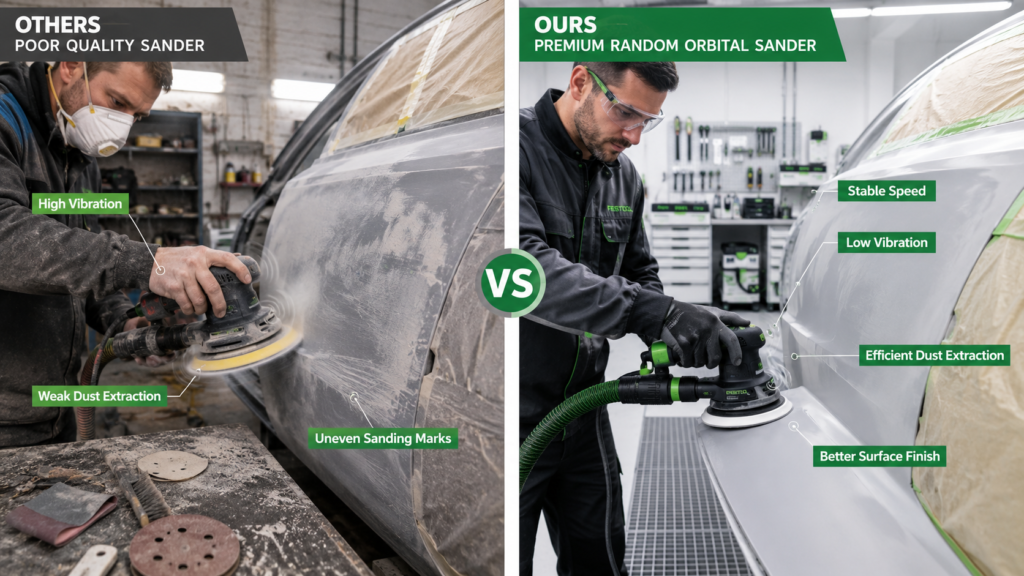
A random orbital sander is one of the most important tools in auto body repair. It is widely used for body filler sanding, primer sanding, old paint removal, surface leveling, and paint preparation.
For professional body shops, choosing a good sander is not only about price. A reliable sander can improve sanding efficiency, reduce operator fatigue, support better dust extraction, and help create a smoother surface before painting.
So, how can you judge whether a random orbital sander is good or not? Here are the key points to consider.
1. Stable Sanding Performance
A good sander should run smoothly and stably. When the tool is working, it should not shake heavily, jump on the surface, or create uneven sanding marks.
Stable sanding performance helps technicians control the repair surface more accurately. This is especially important when sanding primer or preparing the panel before painting.
If the sander is unstable, it may cause uneven scratches and affect the final paint finish.
2. Suitable Orbit Size
Orbit size is an important factor in sanding performance. It affects cutting speed and surface finish.
A larger orbit removes material faster and is suitable for rough sanding, body filler sanding, and old paint removal. A smaller orbit creates finer sanding marks and is better for primer sanding and finishing work.
For many auto body repair applications, a 5 mm orbit is a popular choice because it provides a good balance between sanding efficiency and surface quality.
3. Strong Dust Extraction
For modern dry sanding, dust extraction is very important. A good sander should work well with a dust extraction system.
The sanding disc holes, backing pad holes, air channel, and vacuum hose connection should match properly. When the dust extraction design is good, sanding dust can be removed directly from the sanding point.
This helps keep the panel surface cleaner, reduces dust in the air, and improves workshop cleanliness.
Poor dust extraction may cause sanding dust to stay on the surface, clog the sandpaper, reduce cutting efficiency, and shorten the life of the abrasive.
4. Stable Speed Under Load
Many sanders may look powerful when running without load, but the real test is how they perform during actual sanding.
A good pneumatic sander should maintain stable speed when it touches the panel. If the speed drops quickly when the technician applies light pressure, the tool may not have enough power.
Stable speed helps improve sanding efficiency and creates more consistent surface results.
5. Comfortable Handling
Technicians often use sanders for long periods, so comfort is very important. A good sander should be lightweight, well-balanced, and easy to grip.
Low vibration is also important. If the sander vibrates too much, the technician may become tired quickly, and the sanding result may become less stable.
A comfortable sander helps technicians work longer, faster, and with better control.
6. Good Backing Pad Quality
The backing pad is the part that holds the sanding disc. It directly affects sanding stability, dust extraction, and surface quality.
A good backing pad should be flat, balanced, durable, and compatible with the sanding discs. The hook-and-loop surface should hold the sandpaper firmly, and the hole pattern should match the dust extraction design.
If the backing pad is poor quality, the sanding disc may not stay firmly attached, the tool may vibrate, and the sanding marks may become uneven.
7. Low Vibration and Noise
Low vibration and lower noise can improve the operator’s working experience. In a busy body shop, technicians may use sanding tools every day. If the tool is too noisy or vibrates too much, it can reduce comfort and working efficiency.
A good sander should be designed for stable operation and long-time use.
8. Easy Maintenance
A good pneumatic sander should be easy to maintain. Regular maintenance can help extend the tool’s service life and keep performance stable.
Workshops should pay attention to air pressure, lubrication, air cleanliness, backing pad condition, and spare parts availability.
If replacement parts are difficult to find, after-sales service may become a problem. For distributors and repair shops, spare parts support is an important factor when choosing sanding tools.
9. Real Sanding Results
The final judgment should always come from real sanding performance. When testing a sander, workshops can compare different tools using the same sandpaper, the same air pressure, and the same panel surface.
Important points to check include sanding speed, vibration, dust extraction, surface smoothness, sanding marks, operator comfort, and tool stability during continuous use.
A good sander should help technicians work efficiently and produce a clean, even surface.
Conclusion
A good random orbital sander should provide stable speed, low vibration, efficient dust extraction, comfortable handling, reliable backing pad performance, and consistent sanding results.
For professional auto body repair, the right sander can improve working efficiency, reduce dust, support better surface preparation, and help achieve better paint results.
MINKO provides professional automotive sanding tools, sanding abrasives, and dust-free dry sanding solutions for global customers. Whether you are a body shop, distributor, or automotive equipment supplier, we can help you choose suitable sanding products for your market.
Call to Action
Looking for reliable sanding tools for auto body dry sanding?
Contact MINKO for pneumatic sanders, sanding discs, backing pads, dust extraction solutions, samples, and wholesale quotation.
Email: info@minkoauto.com
Website: https://minkoauto.com
Contact Page: https://minkoauto.com/contact-us/